
R-Alpha Lipoic Acid: What Makes It Different from Regular Alpha Lipoic Acid?

If you’ve been looking for alpha-lipoic acid supplements, you may have come across alpha-lipoic acid (ALA) and R-alpha lipoic acid (R-ALA). Although they sound similar, they are different. If you’re wondering what the difference is, this blog might help.
Both forms promote strong antioxidant activity and cellular energy production. However, R-alpha lipoic acid is the naturally occurring form that the body produces and uses in metabolic processes.
So, what makes R-ALA different, and why might it be a preferred option when choosing an alpha-lipoic acid supplement? Let's take a closer look.
What is Alpha Lipoic Acid?
Alpha-lipoic acid is a naturally occurring, sulfur-containing compound found in small amounts in the body and in certain foods. It plays an important role in cellular energy production, helping enzymes convert nutrients from food into energy.
Alpha lipoic acid is also a powerful antioxidant that helps protect cells from oxidative damage. Oxidative damage occurs when free radicals accumulate faster than the body can manage, damaging essential cellular components.
Most antioxidants work in water-based or fat-based environments. However, ALA is soluble in both, which allows it to act as an antioxidant in different parts of the body. The body can also convert alpha-lipoic acid into its reduced form, dihydrolipoic acid (DHLA). This form has antioxidant properties and helps regenerate other antioxidants, including vitamins C and E, allowing them to continue supporting the body's defense against oxidative stress.
Here’s where things get interesting: alpha-lipoic acid actually comes in two forms.
R-ALA vs. Regular Alpha Lipoic Acid: What’s the Difference?
Alpha-lipoic acid exists in two forms called enantiomers. They are molecules with the same chemical composition but different three-dimensional arrangements. Think of how your left and right hands are mirror images.
The two forms are:
R-Alpha Lipoic Acid (R-ALA): The naturally occurring form produced in the body and found in foods.
S-Alpha Lipoic Acid (S-ALA): The mirror-image form, generally produced during commercial chemical synthesis.
Most conventional alpha-lipoic acid supplements contain a 50/50 combination of R-ALA and S-ALA. This combination is commonly called racemic alpha-lipoic acid.
On the other hand, R-ALA-only supplements provide the naturally occurring R form without intentionally combining it with the S form.
Why Does the R Form Matter?
The biggest difference is how the body uses them.
R-ALA is the form naturally incorporated into specific mitochondrial enzymes that help carry out metabolic processes. These enzymes convert nutrients into usable energy.
R-ALA is the form of alpha lipoic acid that the body naturally recognizes and uses in essential cellular processes. For this reason, some research suggests this form of ALA may be more absorbable, although results have been mixed.
4 Reasons to Consider R-Alpha Lipoic Acid
1. Provides the Naturally Occurring Form
R-ALA is the naturally occurring form of alpha-lipoic acid that the body produces. Unlike conventional ALA supplements, which typically contain both R and S forms, R-ALA provides only the naturally occurring form.
2. Supports Cellular Energy Production
R-ALA plays an important role in mitochondrial function, helping your cells convert nutrients into usable energy (ATP).
3. Provides Antioxidant Support
R-ALA helps support the body's antioxidant defenses by protecting cells from oxidative stress. It also participates in regenerating other antioxidants, including vitamins C and E.
4. Supports Nerve Health and Healthy Glucose Metabolism
Researchers have studied alpha-lipoic acid for its potential role in nerve health, particularly in studies involving diabetic neuropathy. It has also been researched for its involvement in glucose metabolism and insulin signaling.
What Should You Look for When Choosing an R-ALA Supplement?
If you're considering adding R-alpha lipoic acid to your wellness routine, here are a few things to keep in mind:
Check the ingredient: Make sure the label specifies R-alpha lipoic acid instead of just alpha-lipoic acid.
Review the serving amount: Check how much R-ALA is provided per serving.
Consider product quality: Choose supplements from manufacturers that prioritize ingredient quality, testing, and transparent labeling.
Follow the suggested use: Take the supplement according to the manufacturer's directions.
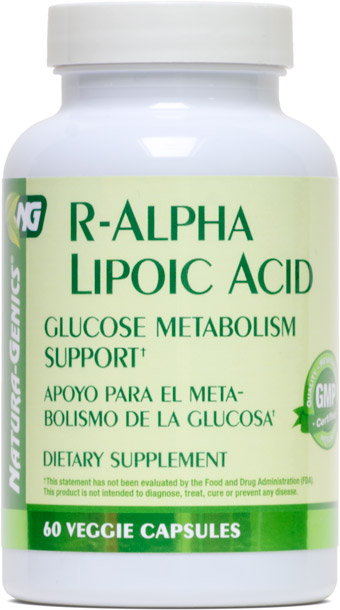
R-Alpha Lipoic Acid by Natura-Genics®
R-Alpha Lipoic Acid is a supplement formulated with R-ALA and biotin (vitamin B7). Including biotin helps support adequate biotin levels, as alpha-lipoic acid may interfere with biotin uptake in certain cellular processes.
It is manufactured in a GMP-certified facility and tested for guaranteed quality. Find it here.
Frequently Asked Questions About R-Alpha Lipoic Acid
Is R-ALA naturally produced by the body?
Yes. R-ALA is the form naturally synthesized by the body and used as a cofactor in important mitochondrial enzyme complexes.
What is the difference between R-ALA and S-ALA?
They are mirror-image forms of alpha-lipoic acid. R-ALA is the naturally occurring form used as a cofactor in mitochondrial enzymes, while S-ALA is generally produced during commercial chemical synthesis.
Is R-ALA better absorbed than regular alpha-lipoic acid?
Available research does not establish that R-only supplements are consistently better absorbed than conventional R, S-alpha-lipoic acid supplements. Absorption can vary depending on the formulation and individual factors.
Can R-ALA support healthy blood sugar levels?
Alpha-lipoic acid has been studied for its involvement in glucose metabolism and insulin signaling.
Is R-ALA an antioxidant?
Yes. R-ALA promotes antioxidant defenses and can be converted into DHLA, its reduced form, which also has antioxidant activity.
Make an Informed Choice for Your Wellness Routine
Not all alpha-lipoic acid supplements are exactly alike. While conventional ALA products typically contain a combination of R and S forms, R-alpha lipoic acid provides the naturally occurring form that the body produces and uses in important metabolic processes.
From its role in cellular energy production to its antioxidant effects, R-ALA is an interesting option for people looking to support overall cellular wellness.
Understanding the difference between these forms can help you make a more informed decision when choosing supplements to complement your everyday wellness routine.
Your Hispanic American Health Store
Health Hispanica® is a Hispanic-American health store specializing in supplements from Hispanic-American-owned brands such as Natura-Genics® and Yerba Farma®. We strive to provide quality and innovative supplements at fair prices and educate our clients and community on healthy living.
The statements above have not been evaluated by the Food and Drug Administration (FDA). These products are not intended to diagnose, treat, cure, or prevent any disease.

Why Do Women Get Hot Flashes During Menopause? Causes, Triggers, and Natural Ways to Find Relief

Leave a comment